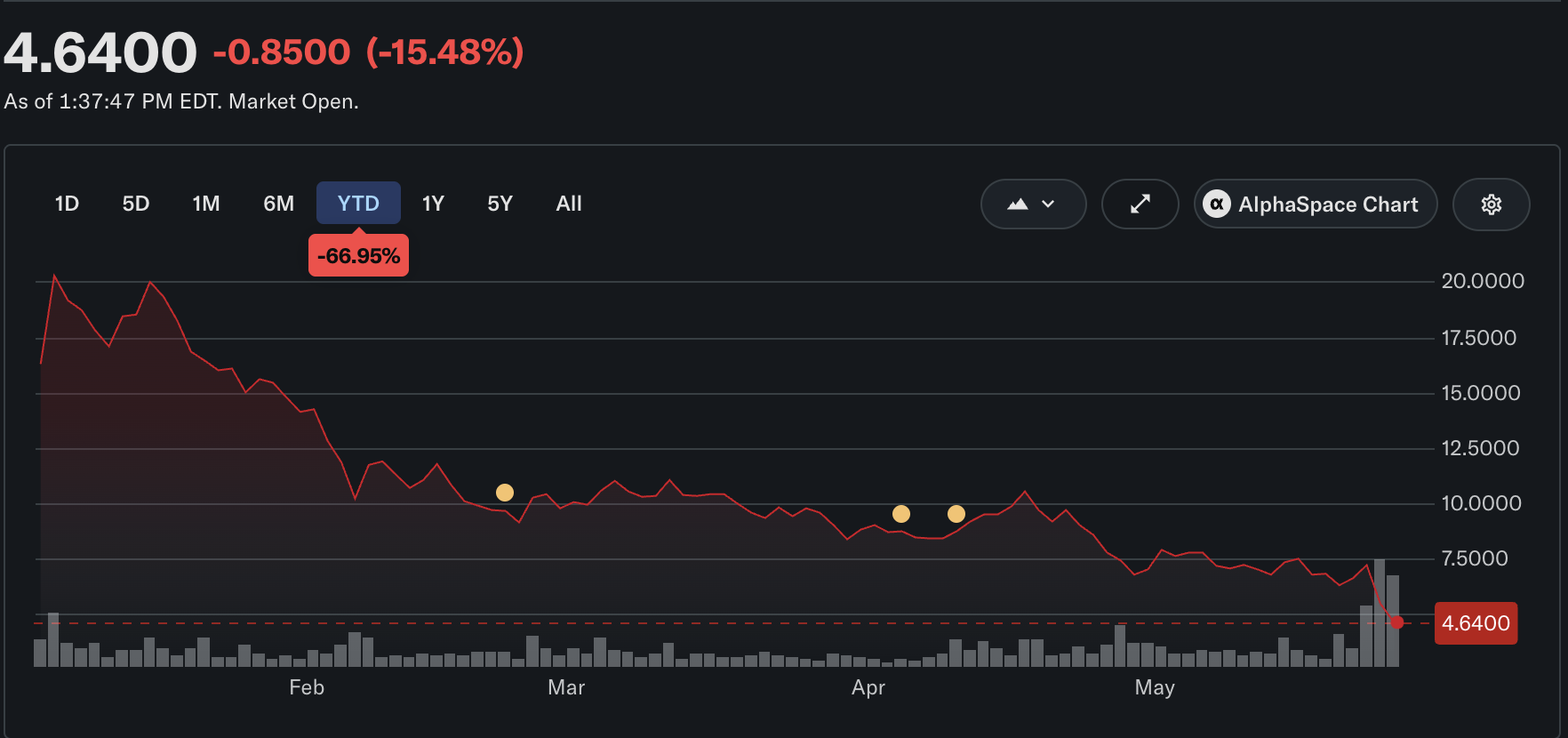
Bitcoin treasury company Nakamoto falls nearly 67% YTD after reverse stock split

Nakamoto (NAKA) is trading down more than 10% on Wednesday just days after the Bitcoin treasury company completed a 1-for-40 reverse stock split undertaken to stay compliant with the Nasdaq stock exchange’s listing criteria.
NAKA stock is down by about 67% year-to-date (YTD) and by more than 99% since its May 2025 peak of about $34 per share, reaching a low of about $0.16 per share in April before the reverse stock split on Friday.
Nasdaq warned the company in December that its shares would be delisted after trading below $1 for at least 30 consecutive days, according to a Securities and Exchange Commission (SEC) filing.
The reverse split reduced the number of outstanding shares to about 17.4 million from about 696 million, according to the company.
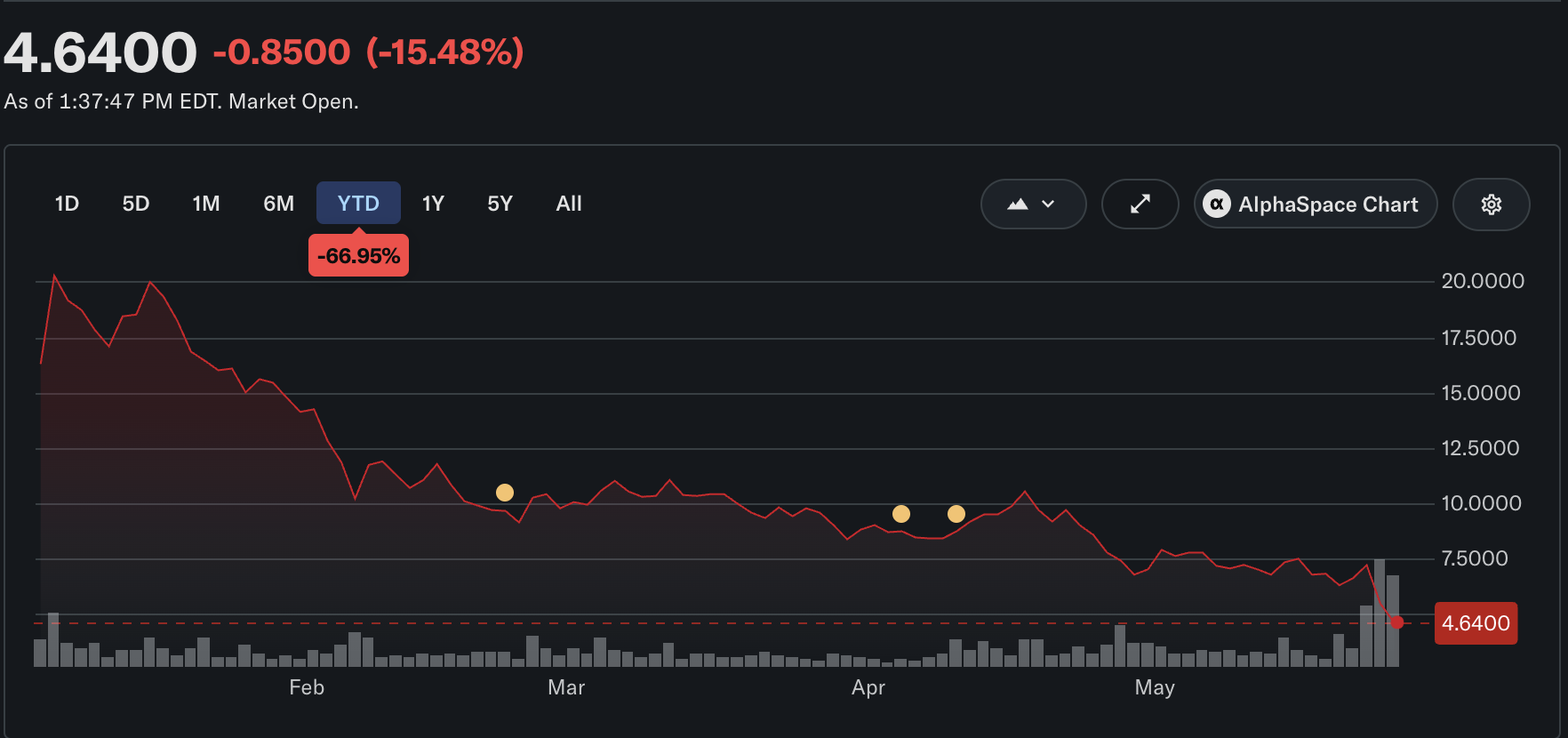
NAKA stock price is down by nearly 67% year-to-date. Source: Yahoo Finance
Cointelegraph reached out to NAKA for comment but did not receive a response by the time of publication.
The decline in NAKA’s value comes amid a broad downturn in the Bitcoin treasury sector that started in 2025; however, the company has also underperformed the industry’s top players, including Strategy (MSTR), Twenty-One Capital (XXI) and Strive Asset Management (ASST).
Related: Bitcoin firm Nakamoto records net loss in Q1 despite sixfold revenue growth
BTC treasury companies show signs of recovery, but market remains challenging
Strategy, the biggest Bitcoin treasury company as measured by its BTC holdings, is up about 2.5% YTD, and is trading at about $155 per share.
Twenty-One Capital, the second-largest publicly traded BTC treasury, with 43,514 coins, is down by more than 17% YTD, and is trading at about $7.26 per share.
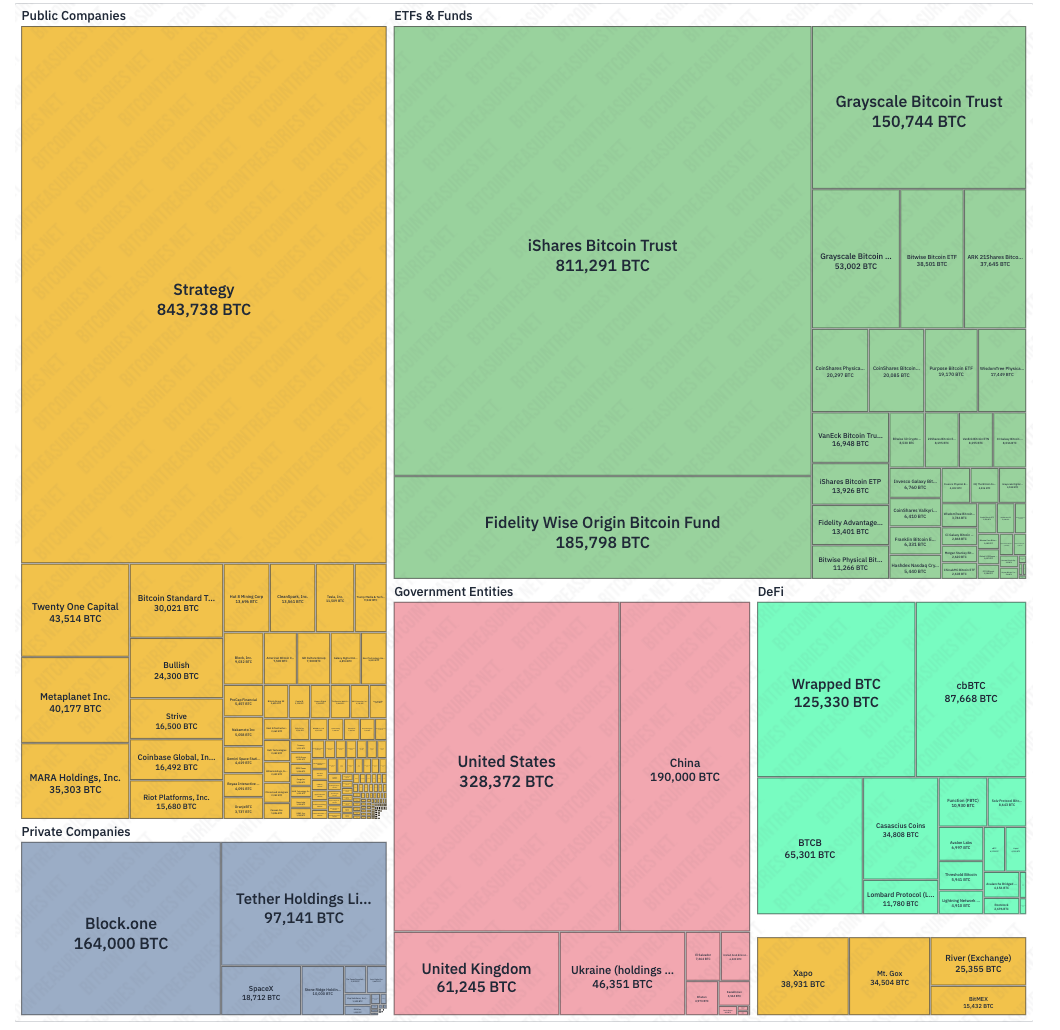
The current distribution of Bitcoin among publicly traded BTC treasury companies, private enterprises, government entities and investment funds. Source: Bitcoin Treasuries
Strive is also up by over 20% YTD, last trading at about $17.72 a share.
The digital asset treasury space is likely to experience consolidation in 2026, as bigger companies eat up smaller firms, according to venture firm Pantera Capital.
“2026 will see brutal pruning. In each major asset class, only one or two players will dominate. Everyone else gets acquired or left behind,” analysts at Pantera forecast in January.
Magazine: Bitcoin will not hit $1M by 2030, says veteran trader Peter Brandt