
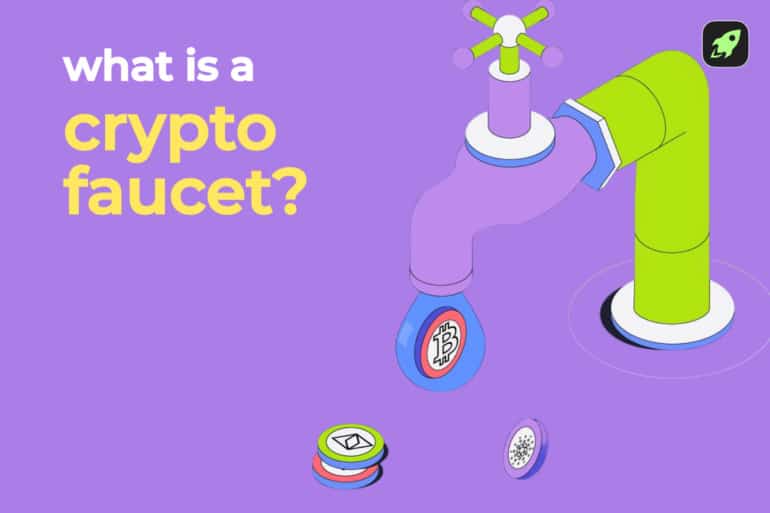
What Is a Crypto Faucet and How Does It Work?
You might have heard about crypto faucets, where you just “earn free crypto by clicking a button.” But after solving captchas and watching your balance barely budge, something feels off. So before you spend another minute on a crypto faucet site, here’s exactly what’s happening, why the rewards are so small, and what risks you need to know about first.
What Is a Crypto Faucet?
A crypto faucet is a website or app that distributes small amounts of cryptocurrency to users who complete simple activities, such as solving short captchas, clicking ads, or watching brief videos. Unlike airdrops or giveaways with larger, one-time rewards, crypto faucets pay out tiny amounts continuously. The model relies on volume: thousands of users generate ad revenue, with clicks and page views turning into fractional rewards in cryptocurrency.
First introduced in 2010, early crypto faucets encouraged adoption by distributing fractions of BTC to newcomers. Today, cryptocurrency faucets still act as “on-ramps”, providing a low-risk way for first-timers to explore crypto tokens and wallets. The main attraction is clear: free crypto with no upfront costs. That’s why many beginners still seek out crypto faucet platforms as their starting point.
The Story of the First Bitcoin Faucet
In 2010, when one bitcoin was worth less than a cent, developer Gavin Andresen launched the first crypto faucet to promote Bitcoin adoption with no commercial goal. The premise was straightforward: a website that gave away free bitcoin to anyone proving they were human. Users solved a captcha, and the faucet dispensed five BTC per claim—an amount that would later be worth tens of thousands of dollars. But faucets began as a tool for ideological outreach, not monetization.
Andresen’s Bitcoin faucet succeeded. By lowering the barrier to entry, it introduced thousands of Bitcoin into the ecosystem when buying or mining it was technically intimidating. Years later, this early experiment continues to influence how cryptocurrency projects distribute tokens and get new users.
How Does a Crypto Faucet Work?
A crypto faucet works through a simple process: join, complete a task, and earn a tiny reward. Over time, users accumulate small payouts, which they can later withdraw. Each stage is important, from signing up and verifying tasks to meeting payout limits.
Step 1: Sign Up or Connect a Wallet
Start by creating an account or connecting your crypto wallet, depending on the platform. Some faucets require registration, while others let you interact instantly through a wallet connection.
For safety, use a separate wallet solely for faucets. This limits your exposure and makes irregular activity easier to spot. Treat faucets as a sandbox, not your main digital asset strategy.
Step 2: Enter Your Wallet Address
Once inside, you’ll need to specify where your earnings should go. This step links your activity on the platform to a payout destination, either through manual wallet address input or a wallet connection.
However, most faucets do not send rewards immediately. Instead, they collect your earnings in an internal balance and only process a transfer once you request it and meet the required threshold. This batching mechanism is essential, as it reduces fees, improves efficiency, and keeps the faucet economically viable.
Step 3: Complete a Simple Task or Verification
Next, complete a simple task such as solving captchas, completing surveys, playing games, or watching ads to receive rewards. The time-to-reward ratio is deliberately kept low to protect the operator’s revenue margins. Some variants use boosted rates, giving higher payouts for more difficult actions like referrals or advertiser offers. Regardless, you exchange attention, clicks, or data for a tiny fraction of cryptocurrency.
Step 4: Receive a Tiny Reward
After you’ve completed a task, the platform delivers a reward, usually a tiny fraction of a coin, such as Bitcoin, Ethereum, or another token. Completing microtasks or referring a friend can also generate rewards.
The tiny size of payouts is intentional. Early faucets issued multiple coins per claim, but to prevent abuse and extend longevity, rewards were lowered to symbolic levels. Rewards flow one drop at a time, requiring consistent effort to earn anything significant. As a result, faucets don’t offer meaningful income—just a slow, repetitive payoff dependent on attention, effort, and operator ad revenue.
Some faucets offer small bonuses for daily streaks, but these only slightly increase payouts and never change the slow-drip model. For example, a Bitcoin faucet typically pays only a few satoshis per activity, especially during bull markets. For most users, faucets serve as an educational exercise, not as a source of real income.
Step 5: Reach the Withdrawal Threshold
Even after you’ve already earned some rewards, you still have to wait. Most faucet platforms require you to reach a minimum withdrawal threshold to avoid repetitive, expensive blockchain transactions. Accumulating rewards and setting withdrawal minimums also help weed out fake users, making large-scale abuse harder and allowing operators time to block suspicious accounts. This rate control lets platforms batch payouts to manage network fees and prevent abuse. For users, it means waiting as faucet earnings gradually accumulate.
Step 6: Move Funds to Your Wallet
Once you meet the withdrawal threshold, the funds are released—manually or automatically—into your main wallet. This concludes the cycle, consolidating small rewards into your larger crypto holdings, though their practical value is often negligible. Because transactions are irreversible, double-check your wallet address and network before withdrawing. At this step, attention to detail is critical, since mistakes can send your earned drops into permanent limbo.
Why Do Crypto Faucets Exist?
Crypto faucets are not designed for income. They exist to encourage adoption, generate traffic, or attract attention. Each serves a specific purpose that shapes how and how often they distribute free crypto. Here’s a short list:
- To attract users as potential exchange customers.
Exchange-operated faucets require accounts, driving signups for future conversions. - To onboard users to specific tokens or blockchains.
Native-chain faucets pay out project-supported coins as cheap user acquisition. - To generate ad revenue by trading user attention for clicks.
Many faucet operators profit from micro-advertising and reward systems that incentivize engagement. - To drive web traffic and build branded email lists.
Some faucets reward repeat visits or newsletter signups, using free crypto for lead generation. - To promote platforms or wallets by offering incentives.
In some cases, companies give away crypto to attract users to their apps or extensions.
What You Need Before Using a Faucet
- Create a fresh, dedicated wallet address for faucet use. Tools like MetaMask make this easy.
- Use separate addresses for each faucet to monitor activity and minimize risk.
- Never share your private keys, not during sign-up, payout, or support. No legitimate faucet will ever request them.
- Check browser security before claiming rewards. Look for SSL/HTTPS and a secure connection, and consider running URLs through malware checkers.
- Avoid fake download buttons that link to malware.
- Understand micro wallets. Some sites send rewards to micro wallets like Faucethub or ExpressCrypto, others pay directly to your main wallet.
- Vet everything thoroughly. Web store reviews can help you avoid wallet extension scams.
- Choose only reputable faucets. If something seems sketchy, avoid it. Seek options vetted through trusted forums, aggregator sites, or official project links.
Types of Crypto Faucets
Crypto faucets operate in different ways. Some dispense bitcoin, others use altcoins, run on testnets, or reward games, quizzes, or ad engagement. All rely on a model that offers small, free crypto rewards in exchange for participation.
Bitcoin Faucets
Bitcoin faucets are the oldest type, appearing in the earliest adoption cycle. While the first bitcoin faucets dispensed entire BTCs per claim, modern bitcoin faucets usually pay in satoshis, the smallest denomination (1 BTC equals 100 million satoshis).
Popular bitcoin faucets attract significant web traffic because of Bitcoin’s brand recognition. Their main purpose is unchanged: to introduce users to networks and wallets and offer new users small amounts to learn transactions, confirmations, and public key management without real risk. For newcomers, it’s similar to learning with play money.
Altcoin Faucets
Altcoin faucets work much like bitcoin faucets, but on blockchains such as Ethereum, Solana, or Cosmos-based networks. Ethereum faucets, for example, pay out gwei (tiny fractions of 1 ETH), allowing on-chain experimentation. Some explorers include built-in ETH faucets for testing purposes. Multi-coin faucets distribute coins across separate chains to simplify access.
Some tools cater specifically to privacy coins. For example, Monero faucets issue micro XMR for tasks. These are educational, not profitable, and let users safely explore decentralized apps, wallet functions, and crypto network concepts.
Testnet Faucet
Not all faucets give real tokens. A testnet faucet dispenses cryptocurrency with no real-world value for use on test networks, like Sepolia in Ethereum’s ecosystem. These are for developers and testers to run transactions and smart contracts in a sandboxed environment.
These tokens have no monetary value and are used to simulate transactions, detect bugs, or preview dApp functions before deployment. Testnet gas fees and other costs typically do not reflect live network conditions.
With no value at stake, testnet faucets face less abuse and fraud. They are essential for building and safeguarding protocols before mainnet rollout.
Game, Survey, and Ad-Based Faucets
These faucets reward tokens for activities such as games, captchas, microtasks, surveys, or watching ads. Each model varies by the type of engagement rewarded.
- Campaigns like Casper Network quizzes reward daily activity with tokens.
- Gamified dApps, such as PoolTogether, enable users to win pooled interest paid out regularly.
- Platforms like CoinBlocks.io link token drops to user activity, with “fire faucet” boosters for group achievements.
- “Roll” faucets, used in the early Dogecoin community, distribute small DOGE randomly, incentivizing repeat visits with fractional value payouts.
Testnet Faucets vs. Regular Crypto Faucets
Use a crypto faucet to receive real tokens for onboarding or experimenting with live wallets, and switch wallets regularly. Use a testnet faucet for building or testing; there are no risks and no rewards.
How Do I Understand If a Crypto Faucet Is Good?
Good crypto faucets are all different, but the safest choices share some common traits:
- Popular faucets lack scam warnings, forced redirects, or SEO manipulation.
- The platform makes its reward logic public (e.g., 1 task = 0.005 Coin).
- The site shows withdrawal limits, fees, and payout timing clearly.
- The faucet does not require KYC for small payouts.
- User data is not sold to trackers or data-scraping scripts.
- Terms, privacy, and cookies are transparent.
- Mixed-format sites isolate risky content from main flows.
If a site passes these checks, you are more likely dealing with a reputable faucet. A good faucet is safer and easier to use.
Are Crypto Faucets Worth It?
Legitimate crypto faucets are useful for testing wallets, confirming network behavior, or onboarding to a new blockchain. They help users learn how platforms and tokens work, offering exposure to digital assets.
Financially, even reputable faucets offer only tiny, fragmented value. If you want to experiment, they may be worth your time, but they’re not a source of passive income. In other words, you can earn rewards, but they’re never substantial.
Crypto faucets are valuable training grounds for enthusiasts to gain experience and knowledge. However, users should beware of scams and always protect their online activity.
The Risks of Using a Crypto Faucet
Not every offer of “free crypto” is legitimate. Many faucets expose users to risks:
- Fake or scam faucets can install malware or deploy phishing scripts during tasks.
- Some platforms leak user data, permanently changing your online footprint.
- Some platforms involve hidden fees or never-ending payout delays.
Always exercise caution, especially with generous or suspicious offers.
The difference between a safe faucet and a scam is rarely obvious at first glance. Changelly developed a checklist to help you identify the warning signs early.
Learn how to spot scams and protect your crypto with our free checklist.


Benefits of Using a Crypto Faucet
Despite risks, crypto faucets can teach you about core crypto functions:
- Many faucets let you practice using wallets, copying keys, and signing.
- Some offer non-custodial testing of sending, converting, and balance-checking.
- With a few faucets, you can explore altcoin dApps, token swaps, or Layer 2 chains.
- Multiple faucets allow more varied tasks and practice in address management and wallet segregation.
Final Thoughts
Crypto faucets are not mining, trading, or staking. They don’t multiply digital assets, but distribute micro-amounts of digital currency.
As a tool for responsible exploration, faucets are useful. If you treat them as a sandbox, not a source of income, you will develop safer habits for the crypto economy.
Do crypto faucets really pay?
Yes, but only in very small amounts. Rewards are real but extremely small. You can accumulate earnings, but crypto faucets are a learning experience, not a financial opportunity.
Can you make real money from a crypto faucet?
No, not in any practical sense. Most faucet rewards amount to fractions of a coin and just a few cents.
Are crypto faucets free to use?
Some are free, but most cover costs by using your attention, data, and engagement. You’ll usually need to watch ads or perform tasks to receive rewards.
Do I need a crypto wallet before using a faucet?
Usually yes. Most faucets require a wallet address to send crypto. Some hold internal balances until you reach the withdrawal minimum, but you still need a personal wallet to access rewards.
What kinds of tasks do crypto faucets usually ask you to do?
Tasks typically include viewing ads, clicking links, or solving captchas. Some faucets may require surveys, newsletter signups, or other microtasks that generate ad revenue. These tasks are designed to be simple and encourage users to return often.
Can a faucet steal from my wallet?
Only if you let it. Legitimate faucets never ask for private keys. If a faucet requests your private key, it’s a scam—leave immediately. Always watch out for phishing, auto-approval tricks, pop-ups, and browser malware.
Do faucets charge fees?
Most faucets are free to use, but you may need to pay a gas fee to withdraw rewards. Some NFT faucets may deduct fees automatically from your claimed rewards if operating on a blockchain that requires gas. The platform may subtract the gas fee from your payout or require you to pay separately.
Disclaimer: Please note that the contents of this article are not financial or investing advice. The information provided in this article is the author’s opinion only and should not be considered as offering trading or investing recommendations. We do not make any warranties about the completeness, reliability and accuracy of this information. The cryptocurrency market suffers from high volatility and occasional arbitrary movements. Any investor, trader, or regular crypto users should research multiple viewpoints and be familiar with all local regulations before committing to an investment.
The post What Is a Crypto Faucet and How Does It Work? appeared first on Cryptocurrency News & Trading Tips – Crypto Blog by Changelly.
Cryptocurrency News & Trading Tips – Crypto Blog by Changelly