Prediction-market operational consolidation could spur M&A wave: Bernstein

Prediction-market operators are bringing trading infrastructure in-house, a rapid shift that could trigger a wave of acquisitions across crypto platforms, sportsbooks, brokerages and standalone exchanges, according to analysts at Bernstein.
In a research report on Monday, Bernstein said the industry is going through “operational consolidation,” with major platforms moving to control more of the prediction-market stack.
“Every consumer platform that matters has merged the front and back end of the prediction-market stack,” they said. This includes distribution, brokerage, exchange and clearing. That convergence had placed businesses that historically operated in separate industries within a single competitive landscape.
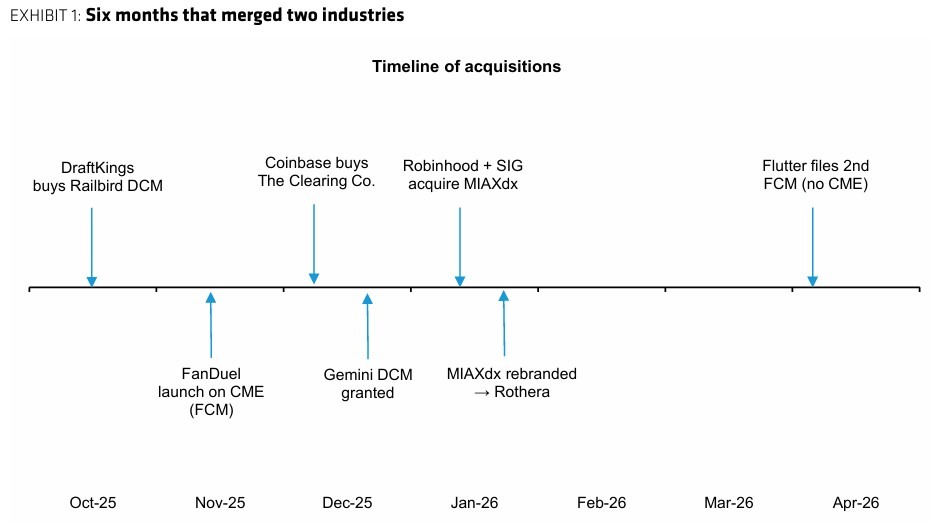
Bernstein pointed to Robinhood routing major World Cup contracts through Rothera, the exchange it jointly owns with Susquehanna, and DraftKings launching DKeX and moving volume away from CME and Crypto.com infrastructure. The firm also cited Coinbase’s acquisition of The Clearing Company and its launch of event contracts as evidence that consumer platforms are seeking to control more of the prediction-market stack.
Owning the infrastructure allows platforms to retain fees that previously flowed to outside partners, making acquisitions a faster route to distribution, licenses, or completing missing parts of the stack. However, the same convergence that strengthens the case for consolidation could also heighten state and federal scrutiny by further blurring the regulatory boundary between financial trading and gambling.
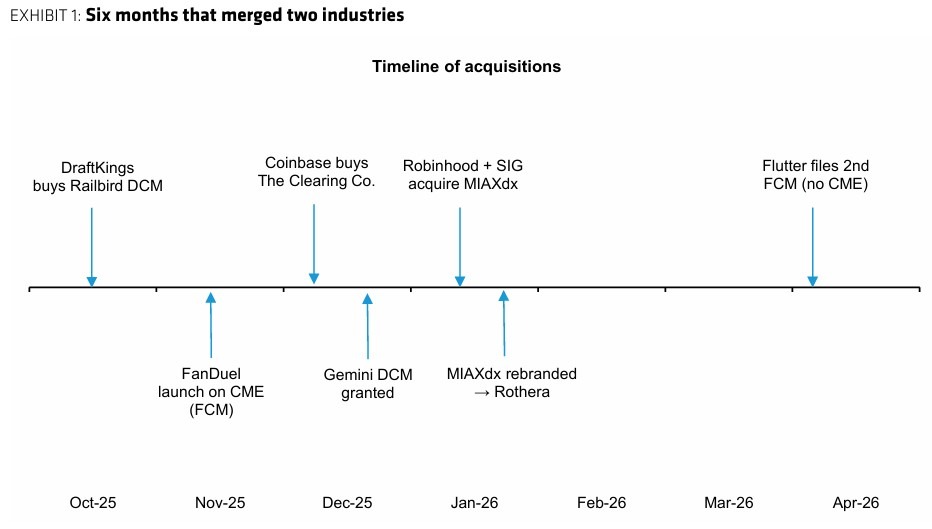
Timeline of acquisitions. Source: Bernstein
Regulatory clash could constrain consolidation
Bernstein said regulatory scrutiny remains one of the main barriers to larger integrations across the prediction-market sector.
While combining crypto platforms with brokerages, sportsbooks and exchanges could improve margins and reduce reliance on outside partners, Bernstein said such deals could attract antitrust scrutiny and deepen disputes over whether sports event contracts should be regulated as financial derivatives or gambling products.
Related: About 60% of World Cup bettors on Polymarket are first-time crypto users
That could further stoke the jurisdictional conflict already playing out across several states. Minnesota enacted what the Commodity Futures Trading Commission (CFTC) described as the first outright ban on prediction markets, while Illinois adopted legislation requiring platforms to obtain a state license before offering sports event contracts.
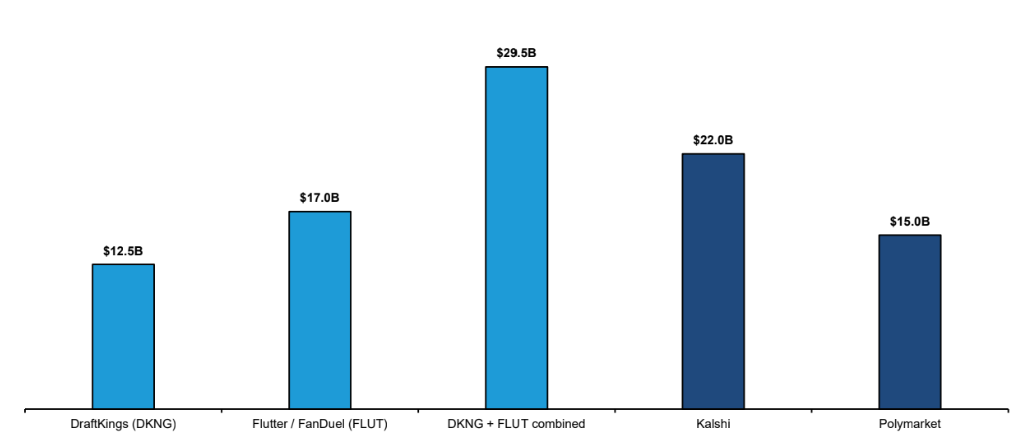
Valuation of online sports books compared to leading prediction markets.
Source: Bernstein.
Kalshi challenged both states’ restrictions, arguing that federally regulated exchanges fall under the CFTC’s exclusive authority.
The growing resistance suggests that consolidation may make commercial sense but remain difficult to execute until regulators and courts settle where federal derivatives oversight ends and state gambling authority begins.
Magazine: Bitcoin slides to $58K, XRP hits $1 but onchain data promising: Market Moves