
Global crypto adoption slumps amid macro pressures, Turkey defies downtrend

Global crypto adoption declined in the first quarter as retail activity weakened under mounting macroeconomic and geopolitical pressures, underscoring the sector’s continued sensitivity to broader market conditions.
TRM Labs’ Q1 Global Crypto Adoption Index showed an 11% year-over-year drop in retail crypto volumes, to $979 billion. The decline marked a second consecutive quarterly contraction and the sharpest pullback since the 2022 bear market.
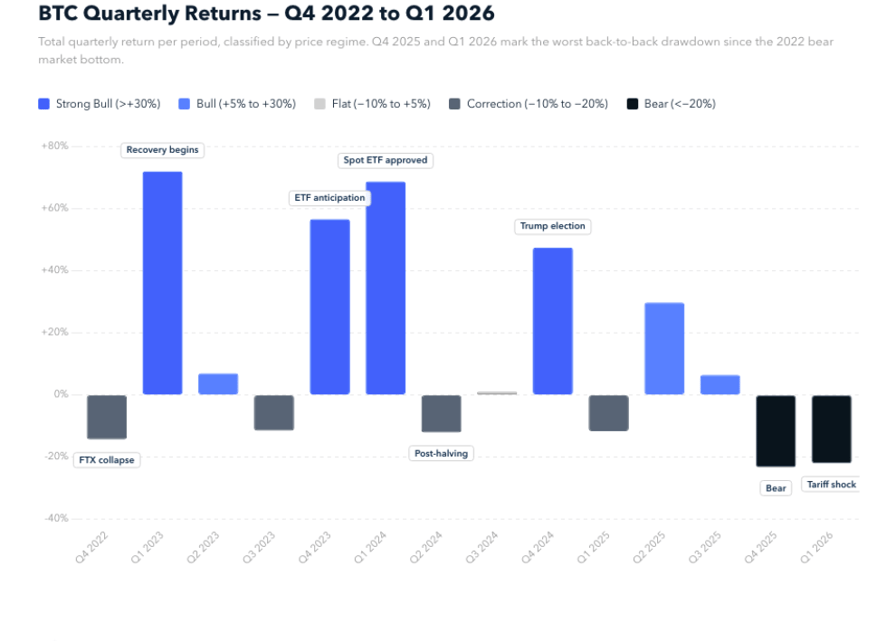
The downturn was largely driven by a stronger US dollar, higher interest rates and a broader risk-off environment, all of which weighed on retail participation, TRM said. The softer demand coincided with a 22% drop in the price of Bitcoin (BTC) during the quarter.
Bitcoin’s correction followed a late-2025 peak above $126,000, with prices trending lower through the first quarter alongside a broader decline in digital asset markets.
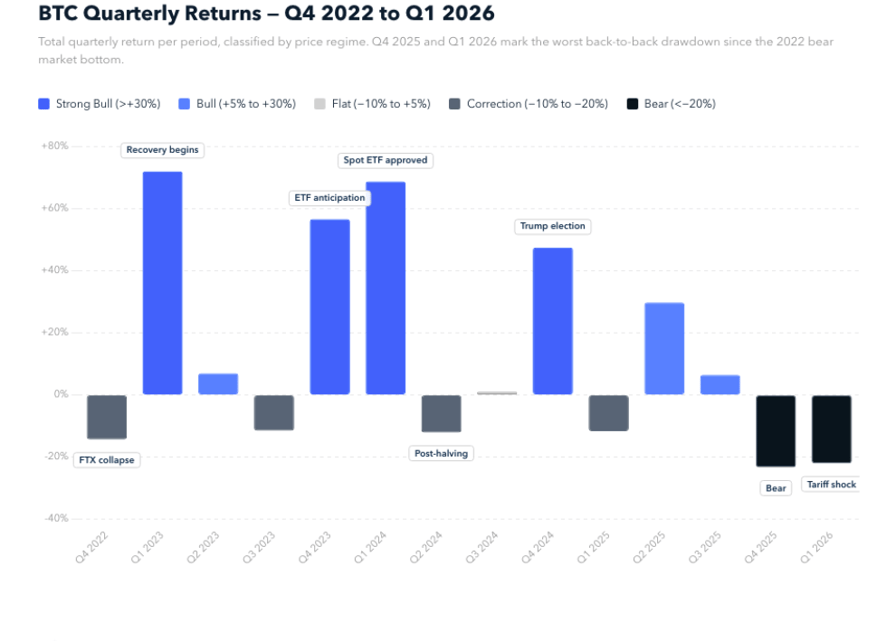
Bitcoin’s quarterly returns between Q4 2022 and Q1 2026. Source: TRM Labs
Related: Crypto Biz: Will Bitcoin secure safe passage through the Hormuz Strait?
Emerging markets diverge from advanced economies
The report highlighted a growing regional divide in crypto adoption, with advanced economies such as the United States, South Korea, the United Kingdom and Germany posting the steepest declines in trading volume. In these markets, where crypto is largely used as a speculative asset, higher opportunity costs and weaker risk appetite pushed investors elsewhere.
Part of that shift was tied to the outbreak of the Iran war in late February, which disrupted energy flows and heightened sensitivity to geopolitical developments across global markets.
By contrast, markets where crypto serves a more functional role, including payments and savings, showed greater resilience. Turkey stood out, with volumes rising 7% year over year, while activity across Latin America and South Asia remained broadly stable.
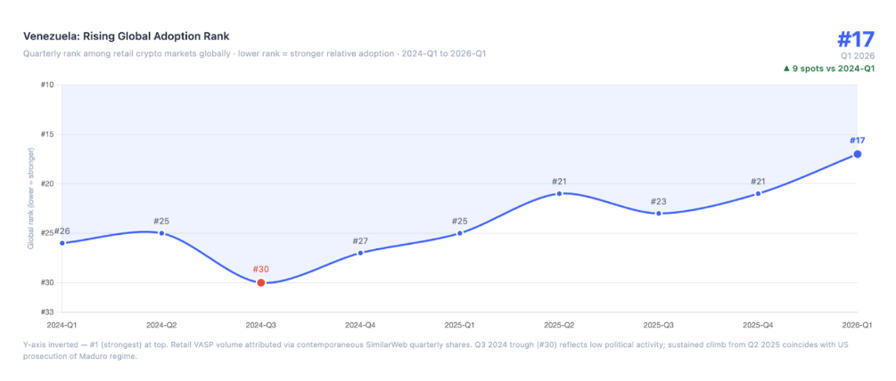
The study also flagged Venezuela as a major growth market for crypto adoption amid ongoing sanctions. Source: TRM Labs
“This divergence reflects a fundamental difference in demand: where domestic monetary policy is constrained or capital controls limit alternatives, crypto functions as a store of value and shadow dollar system,” TRM said.
Related: Stablecoin supply reaches $315B in Q1 as USDC rises, USDT declines