
Africa records highest stablecoin conversion spreads, data shows

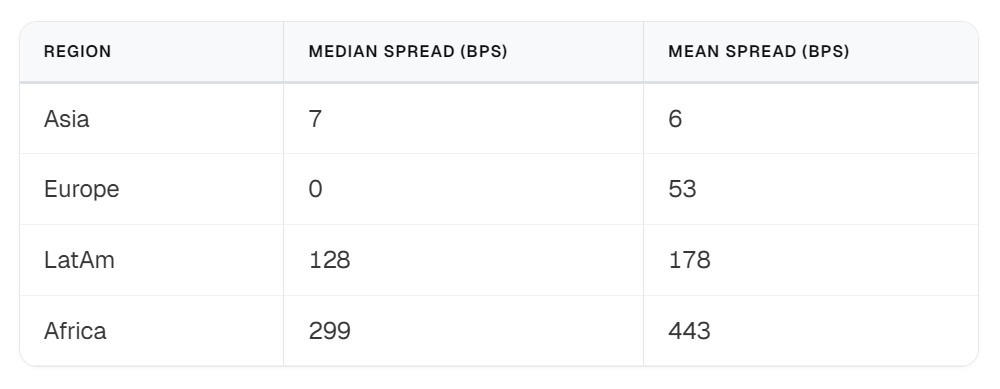
Africa recorded the highest median stablecoin-to-fiat conversion spreads among tracked regions in January, according to data observed by payments infrastructure company Borderless.xyz, covering 66 currency corridors and nearly 94,000 rate observations.
The regional median spread was 299 basis points, or about 3%, compared with about 1.3% in Latin America and 0.07% in Asia. In Africa, conversion costs ranged from about 1.5% in South Africa to nearly 19.5% in Botswana.
The data measures “spreads,” or the gap between a provider’s buy and sell rate for a stablecoin-to-fiat pair. Similar to a bid-ask spread in traditional markets, it reflects the execution cost paid when converting stablecoins into local fiat currency.
The findings suggest that while stablecoins are promoted as a cheaper alternative to traditional remittance rails, actual costs vary widely across African markets and appear closely tied to local provider competition and liquidity.

Competition drives pricing gaps
Borderless.xyz found that markets with several competing providers generally had conversion costs from about 1.5% to 4%. In markets with only one provider, costs often exceeded 13%.
Botswana recorded the highest median conversion cost in January at 19.4%, though pricing improved later in the month. Congo’s costs were also above 13%. By contrast, South Africa, which has a more competitive foreign exchange market, showed costs of about 1.5%.
The report suggested that these differences are driven primarily by local market conditions, such as liquidity and competition, rather than the underlying blockchain technology. In countries where multiple providers operate, conversion costs stayed closer to the regional average.

Related: Uganda opposition leader promotes Bitchat amid fears of internet blackout
Stablecoins versus traditional foreign exchange
The report also compares stablecoin mid-rates with traditional interbank foreign exchange rates, measuring what it calls the “TradFi premium.”
This metric reflects whether stablecoin exchange rates are cheaper or more expensive than traditional FX mid-market rates.
Across 33 currencies globally, the median difference between stablecoin exchange rates and traditional mid-market foreign exchange rates was about 5 basis points, or 0.05%, indicating the two were largely in line.
In Africa, the median gap was wider at about 119 basis points, or about 1.2%, though the difference varied significantly depending on the country.
On Jan. 24, economist Vera Songwe said at the World Economic Forum in Davos that stablecoins are helping reduce remittance costs across Africa, where traditional transfer services can charge about $6 per $100 sent.
The new data adds context, suggesting that while stablecoins offer faster settlement and potential savings compared with legacy services, conversion costs within specific corridors remain elevated.
Magazine: Hong Kong stablecoins in Q1, BitConnect kidnapping arrests: Asia Express